
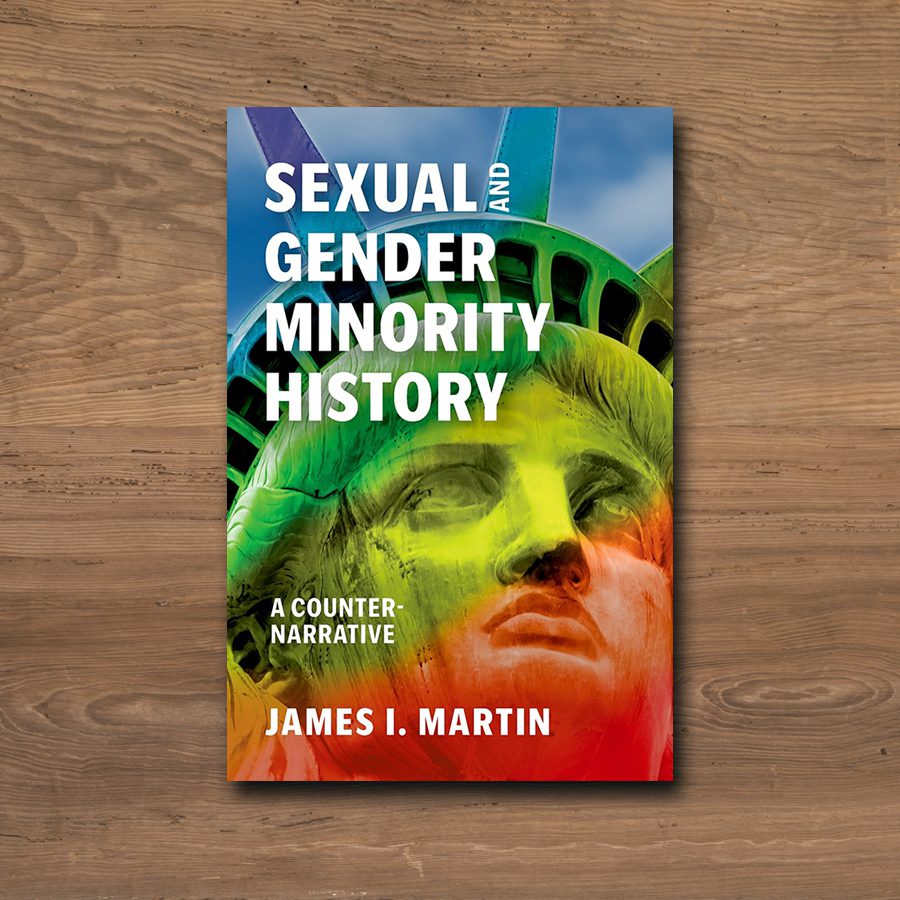
Interview with author, James I. Martin
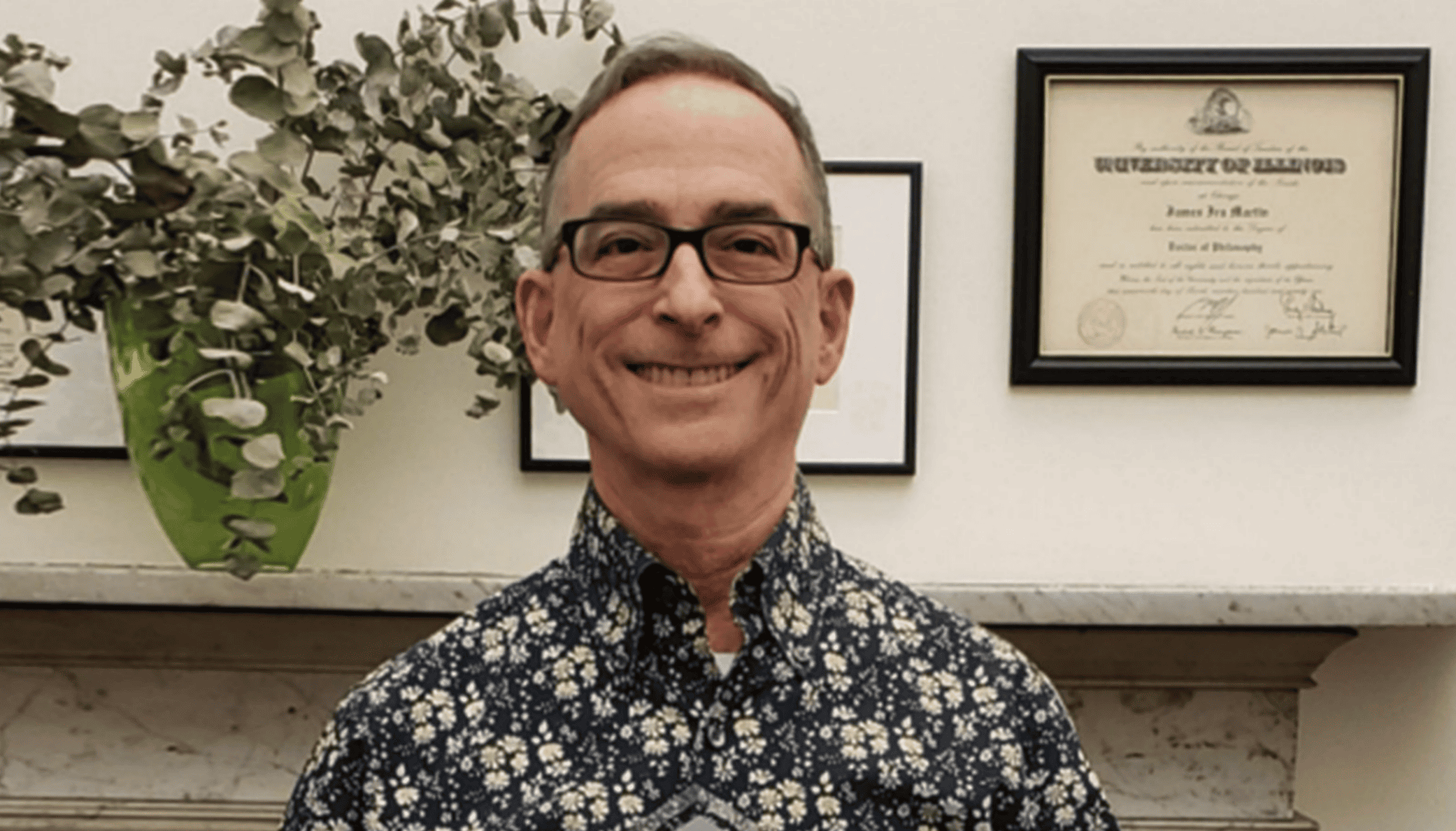 I’m interviewing James Martin, the author of “Sexual and Gender Minority History: A Counter Narrative”
TPF • So, how did this book come about, and was it impacted at all by your experiences as a professor?
JM • Yes, it entirely came out of my academic experience. I was on faculty at NYU for 23 years in social work. When I was able to, I started a course on LGBTQ issues and I taught it for 18 years. Over that time I changed it every year. Eventually I started to include history material and within a few years it became a quarter of the course.
People often asked me, are you going to write a book about all this? And I always said, no, I couldn’t, I couldn’t.
I was just so busy as a professor and administrator that I couldn’t clear out space in my head around writing a book on my own. And I never single-authored a book before. Also, I wasn’t trained as a historian and I thought, all those people who are trained in historical methods will say, you don’t know what you’re talking about or you don’t know what you’re doing. So I was really kind of afraid to do that.
But after I retired, I thought, maybe it’s time to just do it. So, yes, it came out of my teaching experience.
TPF • What subjects were your students most interested in?
JM • It was really common that they found the historical material some of the most interesting stuff in the whole course. They also found the attention to international issues really interesting. In the last few weeks of the course, I divided the class into small groups and they had to select a country to focus on. They had to prepare a presentation on that country, including a focus on a particular LGBTQ issue. I think a main reason they found the historical and international issues so interesting was that was stuff they’d never heard about.
TPF • One thing I enjoyed is how the book captures the larger arc of history. As a reader, you really see that you are a moment within an ongoing timeline. That the history is continuing, and we are all a part of it. I’m there organizing the Wholesome Queers Meetup every weekend, each event is another little step in this whole journey. Your book gives each of us a context in the larger arc of the LGBTQ story.
JM • One thing I did want to do in this book, because there are a lot of books on LGBTQ history– most of them, not all, but most of them focus only on LGBTQ history. They’re not talking so much about the larger context. And they’re talking about a particular period in time or a particular city.
What I wanted to do was a retelling of American history. Not changing American history, but putting LGBTQ stuff in it.
Also, a main point of my book is that history is a story that’s constructed from particular perspectives, and history told from the perspective of sexual and gender minorities is valuable but rarely told.
TPF • It’s part of a larger fabric.
JM • Exactly. So that’s why I started out with what’s going on more broadly. And then focus on what were the sexual and gender minority issues. What was happening there?
TPF • Did you have a page count? How did you prioritize in your edit? It seems like it’d be very easy to get overwhelmed with the volume of stories in our past.
JM • The first step in developing this book was I had to submit a proposal to the publisher. And one of the things that I had to propose was how many pages it was going to be. You know, I didn’t say 200. I don’t know if I said… 175 or whatever. The acquisition editor said that’s a little low. He recommended 200, and that ended up being the page limit. So, I had to have the book fit into 200 pages. It could go over a little bit, but not a whole lot. [final book is 224]. So yes, there definitely was a page limit. I selected it at the very beginning before I wrote it.
TPF • Does the number of chapters correlate to the number of weeks in a semester?
JM • No. Actually, when I sat down to write this book, I thought, oh, this won’t be so hard. I’ll just, you know, take what I taught and, you know, write it. And very quickly I learned I couldn’t do that. I realized pretty quickly that lecturing about something is really different from putting it into a book. And I had to say a lot more than I had said in any lecture. It had to be way more fleshed out.
And I felt I had to be a lot more careful about what I was putting on paper, that it was accurate. I didn’t want to put things down and later realize, oh, that’s not true at all. So I was trying to be very careful. So shortly after I started, I just completely abandoned the lectures.
For the proposal I had to submit an outline of basic chapters. Like, what were the chapters going to be? They changed somewhat as I wrote the book, but not a whole lot.
But as I was writing this, I did not know how I was going to end the book. I didn’t know how close to present day I would go. I even talked about this to a friend of mine who was a former colleague. I said, I don’t know how I’m going to end the book. And she said, it’ll occur to you. And eventually it did. About two chapters from the end, I finally realized how I was going to end it.
TPF • I remember it felt like a good ending.
JM • I have a fairly lengthy chapter about the 80s and the AIDS epidemic and then after that, I compress time a little bit, and cover the 90s with some references to things beyond the 20th century. And then there’s a summary chapter.
I decided not to go beyond the 20th century. There were multiple reasons. One was just the page limit. And I felt when the time being written about gets too current, it feels like it’s current events, not history. And I wanted to avoid that. And I did not want to end the book with marriage. I did not want the culmination of all this history to be marriage. One reason is that it’s not relevant enough to large numbers of people under the rainbow.
TPF • Were you involved with any street activism yourself?
JM • I was not strongly involved with LGBTQ street activism. Once when I was in college, during the 1970s, this was protesting the Vietnam War, I was in a group of people that went up and blocked a freeway during a protest. And the county sheriff, which was very conservative at the time, wasn’t having it. And they ended up marching us back to campus with bayonets at our backs. And that just freaked me out. My activism has been of a different sort.
TPF • I’ve done marches and protests. But, yeah. I don’t do anything confrontational. I’ve complicated feelings about… I mean, I admire some of the boldness I see online, but I think changing hearts and minds fundamentally is a more diplomatic journey.
JM • I think all of it has its place. I agree with you. But also, during many of my years, I was not on the coasts where so much of LGBTQ street activism was happening. I was in in Michigan, Illinois, Texas. So my activism in the last few decades was really within my career. Social work and social work education in particular was really where my activism was. And some of the writing I did. In the academic world you have to publish all the time, I was in Texas at the beginning of my academic career, and I wrote this article about why lesbian and gay faculty in social work have to be out. I thought it made sense. I then had a colleague of mine who was lesbian, who told me that she liked the article, but it was very controversial. I remember being surprised by that. I was also active in starting and leading LGBTQ organizations in higher education.
TPF • Did you read The Deviant’s War: The Homosexual vs. the United States of America by Eric Cervini?
JM • No, I need to.
TPF • It was a remarkably tedious book, I kept thinking, I’ll stop at the end of this chapter. But then I kept reading, and more than anything, it captured the persistence it required to gain our rights. The reader plods through every single frickin’ trial and court case. The sheer determination of these folks to get us equal rights is humbling. The absolute doggedness of again and again and again and again. Let’s do it this way. Let’s do it that way. So I did finish the book and I found it a valuable read. Not engrossing, but I couldn’t put it down, if that makes any sense.
JM • I haven’t read it.
TPF • On one hand, it’s nice to have that deep down dive into the weeds, but it’s also nice to have the larger arc that doesn’t get mired in the details. That’s what I enjoyed about your book.
JM • I didn’t go into the entire story about LA or Chicago, or anywhere else, because I was mostly trying to tell the larger story. And to include enough detail, but I wasn’t trying to do that kind of deep dive.
One of the things that was very important to me was to make sure this book wasn’t a story only about New York or about L.A.. Or San Francisco. Almost everything that’s written about LGBTQ history is about New York or to a lesser extent, San Francisco. And a little bit L.A. What I wanted was to tell a story that transcended place. And partly because I’ve lived in a whole bunch of places, it always annoyed me that New York, as important as it was to all of this, gets all the press as if nothing happened anywhere else.
Or San Francisco. It always annoyed me. I lived in Texas, and there were a lot of important things that happened there. And I lived in the Midwest and a lot of important things happened there. So I wanted to make sure that it wasn’t just one place. There’s no way you could go into deep detail for the whole country without it being an encyclopedia.
TPF • Do you have any thoughts about where we are now in LGBTQ history and where we want to go? What things we should be aware of?
JM • Yeah. So I was thinking about that question, and writing this book really made me reflect on identity politics, because I think we’re still in that pattern. I understand that every group, every subgroup of queer people needs to have its own space so that people can learn who they are, because you learn who you are in relation to people who are like you. And I understand that it’s really important. And that different groups of people have different issues that they hold particularly important.
But in terms of being able to move ahead on issues that are more broad, there’re a lot of problems. Too often we don’t find the issues that are common to all of us, that we can all focus on. Because I think that history shows we’ve made the most progress when people can work across differences. Like in the 60s, like pre Stonewall and then post Stonewall, there was all this activism that happened in bars that were largely of working class people, often nonwhite and in many cases, gender diverse people. And then there were budding organizations that were more often white and middle class. When those two groups worked together, even though they often didn’t see eye to eye, to me, that’s where I saw progress was made.
There was one book that I read and its particular thesis was that there has been an overemphasis in LGBTQ history on organizations and queer politics, and not nearly enough attention given to what happened in bars, because in many cases, bars were the main structures in those communities. There was actually quite a lot that happened. By leaving that part of the story out, there’s a very distorted picture of how things developed without telling the story about what happened in bars, especially since those people often were not as middle class. That book had a big impact on me, obviously.
I think there’s been stuff written about how our major organizations, especially the national organizations, tend to be dominated by the need to get money. So therefore they rely on wealthy people who tend to be white, who tend to be men. And so then they become beholden to them. And often they do good work. That’s not the problem. The problem is that the issues that concern that group of people, it’s a particular set of issues. And then other issues don’t get that attention. So the kind of broader coming together focus, I think is still a problem. I can see that often white gay men have had too much attention. We’ve had too much of the control. In some cases the response to this has been, well, give somebody else a chance. We’re going to give all the attention to another group, now. My feeling is that we all need to play a part. Otherwise you’re always leaving people out, and you’re stunting the movement.
I was the head of an organization in social work education for a few years previously named The Commission on Gay Men and Lesbian Women. It was a silly name. And it became obvious we needed to change it. And, we had a whole debate that lasted for a long, long time about what should we change it to. And you know, which groups should we include? Because that’s usually what organizations do, they include the B and they include the T, and they add the I and the A, and so on. But back then I thought this is a dead end, because there’s always going to be people who are left out.
TPF • And which letter comes first?
JM • Exactly.
And so I thought we should go to something entirely different and get out of that whole competition about which groups should be in and which groups are out and which is first and which is second.
TPF • So we use Wholesome Queers. (laugh)
JM • Right. And that’s why I used the term sexual and gender minority in the title, and not LGBTQIA.
TPF • You had a first person experience of some of what you wrote about. Did it make it more complicated to write objectively about those events?
JM • So that’s a really interesting question. And the first thing I wanted to say was that one of the points of my book is that history is not objective. It’s a story that gets written from particular social standpoints. I wanted to tell it from this standpoint, but writing the book did bring up a lot of feelings for me at various points.
Not the earliest stuff, you know, that happened long before I was born, but stuff that happened that I had some contact with. And sometimes not even direct contact. There are two examples I can think of. For some reason, and I still don’t know why, when I was writing about the White Night Riot in San Francisco, which happened after the lenient sentence was given to that guy who murdered Harvey Milk, writing that, and then reading what I had written, I just burst into tears.
TPF • Were you there?
JM • I was not there. I didn’t live in San Francisco. But there’s something about that story that just affected me.
And then the other example was writing about the AIDS epidemic, which I did experience much more directly. And I lost most of my close friends. For probably three fourths of my academic career, I focused on HIV prevention, and it was out of the idea that I owed it to my friends who died. So writing about all of that was difficult at times. It was emotionally draining to write and to read about, because I was doing huge amount of reading as I was writing. So that part was hard at times.
And there were other things that I just enjoyed so much. In some cases it wasn’t necessarily stuff that I experienced myself. I loved learning about and then writing about the 1920s. To me, that was just so much fun. And I was astonished to learn how much was happening in Philadelphia, where I grew up, during the time when I was growing up. There were emotional highs and lows.
TPF • It makes sense. It means that you’re engaged with your material. How can you write a good book without caring?
JM • I agree. You do a very different type of writing than I do. I’ve never done really creative writing. The writing that I’ve done is academic writing. And to me, the challenge in writing this book was to try to make sure that it wasn’t too dry. And to keep it interesting for the people who read it!
TPF • I think you succeeded. “Sexual and Gender Minority History: A Counter Narrative” is a worthwhile read!
* **
As this book is for the textbook market, it is more expensive than mass market books… just sort of the nature of the beast. $80.58 for the hardcover, and $87.99 for the Kindle. But you can request that your local library add it to their collection! These links are how you can do that.
https://lacountylibrary.org/recommend-a-title/
